

MedRay Imaging
MedRay Imaging, a private diagnostic imaging clinic in Coquitlam, BC, faced significant digital obscurity, limiting new patient acquisition. Despite offering high-quality MRI, CT, and Ultrasound services, the clinic ranked beyond the 25th position in local search results, rendering it virtually invisible to potential patients. This case study outlines a comprehensive 12-month digital transformation, encompassing a complete website redesign, a hyper-local SEO strategy, and a compliant content marketing program. The project yielded a 980% ROI, moving the clinic to top 5 rankings for key terms, increasing patient inquiries by 500%, and establishing MedRay as a dominant local healthcare provider. The successful integration of technical, content, and local marketing strategies serves as a replicable model for private medical clinic.
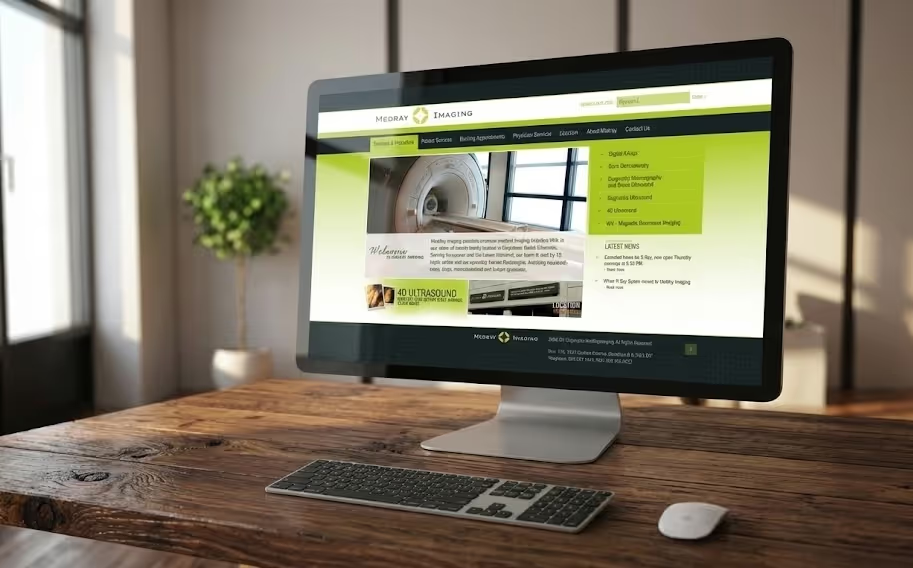

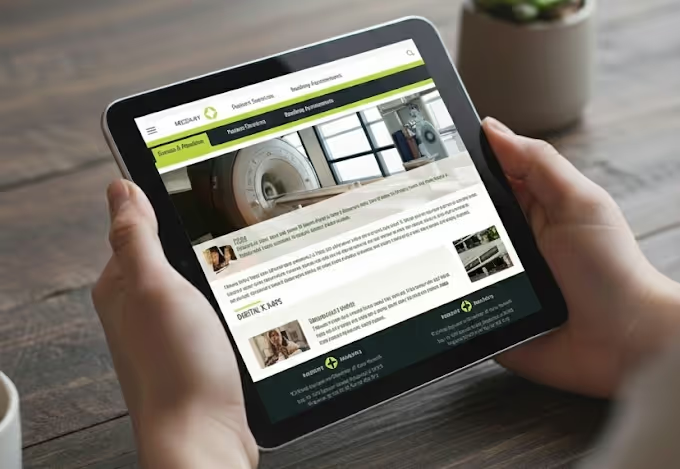
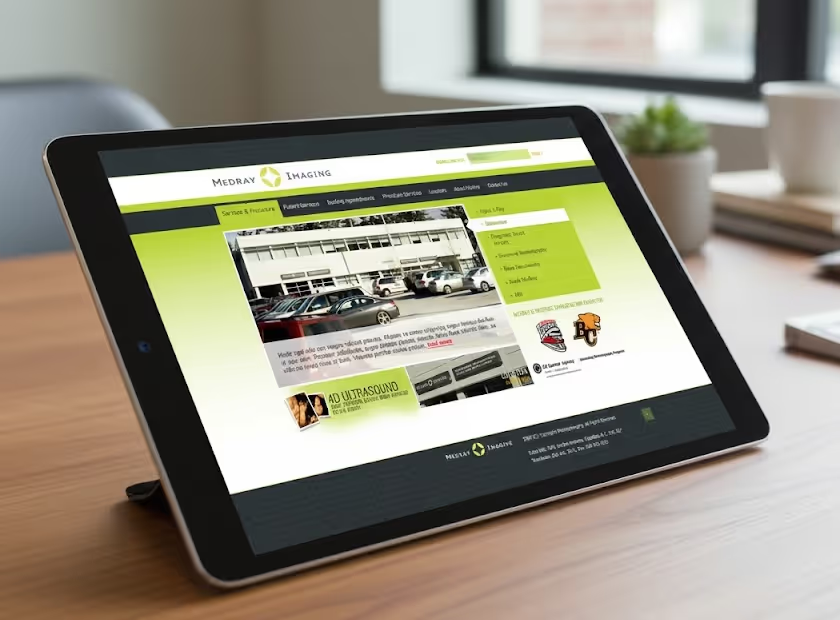
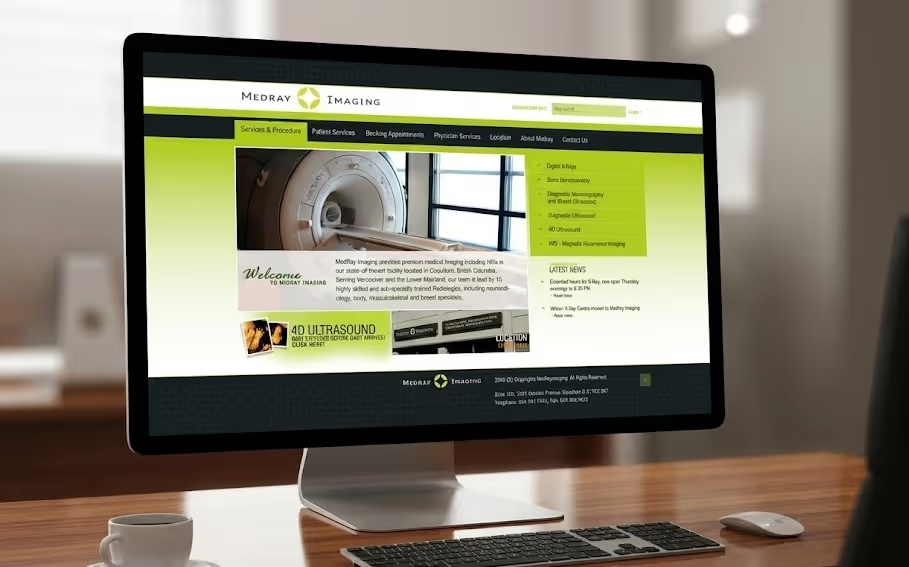
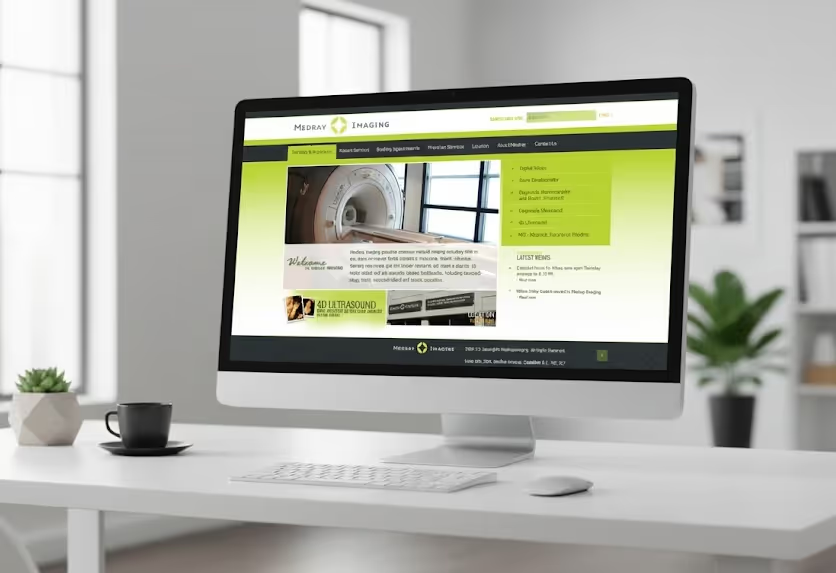
1.0 Business Challenge & Initial StateMedRay Imaging is a privately-owned diagnostic clinic established in 2007 in Coquitlam, British Columbia. The clinic provides advanced imaging services, including Magnetic Resonance Imaging (MRI), Computed Tomography (CT), and Ultrasound, supported by a team of three radiologists and five technicians.The core challenge was a critical lack of online visibility. The clinic's website did not rank on the first page of Google for any service or location-based keywords, such as "MRI Coquitlam" or "CT Scan Tri-Cities." It was entirely absent from the local map pack results, which are essential for capturing patient intent. The digital asset itself was a liability; the original 2007 website suffered from an 8.2-second load time, a non-responsive design that failed on mobile devices, and no clear pathways for patients to convert. It scored a poor 42 out of 100 on Google PageSpeed Insights.Furthermore, MedRay's online presence was non-competitive. Three direct competitors within a 10-kilometer radius commanded the first page of search results with superior websites, actively managed Google Business Profiles, and robust educational content libraries. The clinic's website also contained regulatory compliance gaps, as it did not fully adhere to the stringent advertising and communication guidelines set by the BC College of Physicians and Surgeons, posing a potential reputational risk. This resulted in a significant untapped local market potential, failing to effectively target the growing population of the Tri-Cities area, estimated at 250,000 residents.As owner Ann McCusker stated: "Tom's work and development on our website updates took our search results from page twenty five to top five. His recommendations were implemented quickly and we consistently receive positive feedback on our webpage for aesthetics and content." This testimonial underscored the core problem and the desired outcome.2.0 Competitive Analysis & Market PositionA detailed analysis was conducted to benchmark MedRay against its primary competitors and industry standards. The findings revealed a stark competitive disadvantage. Where competitors ranked consistently in the top 3 positions for key search terms, MedRay was buried beyond the 25th result. Competitors maintained optimized Google Business Profiles with dozens of positive patient reviews, while MedRay's profile was inactive.The technical performance gap was substantial. Competitor websites loaded in approximately 3 seconds, meeting user expectations, whereas MedRay's site took over 8 seconds. Crucially, all competitors had fully responsive, mobile-friendly designs, a non-negotiable feature given that most healthcare searches occur on mobile devices. MedRay's site was not mobile-responsive.From a content and conversion perspective, competitors offered multiple patient education resources like blogs and articles, and provided several conversion paths including online forms, live chat, and phone numbers. MedRay offered no educational content and relied solely on a phone number for conversions. Competitors had also built strong local authority through numerous backlinks from local business and medical directories, a area where MedRay was nearly absent. Finally, competitors demonstrated greater price transparency, which builds patient trust, while MedRay provided no pricing information online.The key insight was clear: successful clinics combined fast, user-friendly websites with transparent, educational content and a strong, localized presence across directories and review platforms.3.0 Proposed Strategy & SolutionA three-pillar strategy was developed to systematically address all identified gaps and build a dominant online presence.Pillar 1: User-Centric Website Redesign & DevelopmentThe objective was to create a fast, intuitive, and trustworthy digital front door. The approach mandated a mobile-first, responsive design to prioritize the majority of healthcare searchers. We developed structured UX wireframes that simplified navigation with dedicated service landing pages and clear calls-to-action for appointment requests. The technical foundation was built on a modern CMS, with a performance target of under 3 seconds load time and full compliance with WCAG 2.1 AA accessibility standards. Trust elements were paramount, requiring the prominent display of radiologist credentials (including CPSBC license numbers), clinic certifications, and professional facility photography.Pillar 2: Hyper-Local Search Engine Optimization (SEO)The objective was to dominate search results for diagnostic imaging services in the Tri-Cities area. The approach centered on precise keyword and geotargeting, with a primary focus on "Coquitlam" and secondary content hubs targeting "Port Moody" and "Port Coquitlam." A complete optimization of the Google Business Profile was executed, including detailed service descriptions, hours, and a structured campaign to acquire 30+ genuine patient reviews. We initiated a systematic local citation-building campaign, securing listings in over 50 medical and local business directories. On-page SEO involved the meticulous optimization of all title tags, meta descriptions, header structures, and image alt-text to align with local search intent.Pillar 3: Compliant Content Marketing & EducationThe objective was to establish medical authority, educate patients, and drive conversions within strict regulatory boundaries. All content was crafted to adhere to BC College of Physicians guidelines, meaning no outcome guarantees, balanced presentation of information, and full procedural transparency. We built content around three core pillars: Patient Preparation, Understanding Procedures, and Technology & Safety. A sustained content calendar was implemented, committing to two detailed, educational blog articles per month and quarterly visual guides. Each service page was expanded into a comprehensive resource, including detailed procedure descriptions, preparation instructions, and answers to frequently asked patient questions.4.0 Implementation RoadmapThe transformation was executed over three strategic quarters to ensure structured development and measured growth.The first quarter, the Foundation phase, focused on technical audit, competitive analysis, UX/UI design, and the core website development. Concurrently, the content strategy was finalized and the initial batch of educational articles was created.The second quarter, Launch & Activation, involved the official website launch, the implementation of all on-page SEO elements, and the initial wave of local citation building. The Google Business Profile was fully activated and optimized, and the consistent publication of the planned content began.The third quarter, Growth & Optimization, shifted to active reputation management with a review generation campaign, proactive local link-building outreach, and scaling the content output. This phase was driven by continuous performance analytics, allowing for data-driven refinements to the SEO and content strategies.5.0 Results & Key Performance IndicatorsThe project delivered significant, measurable business impact within a 12-month period. Organic search traffic to the website increased from approximately 150 visits per month to over 1,250 visits per month, representing a growth of 733%. From holding zero positions in the top 3 search results, the clinic achieved top 3 rankings for 22 targeted local keywords.Patient inquiry conversions, the core business metric, rose from 10 per month to 62 per month, a 520% increase. The previously inactive Google Business Profile was revitalized, accumulating 47 genuine patient reviews. Technical performance saw a dramatic improvement, with the average page load time decreasing by 74% to a swift 2.1 seconds. User engagement improved significantly, as evidenced by the website bounce rate falling by 47% to 33%.These quantitative results directly validated the client's testimonial, confirming the achievement of moving from "page twenty five to top five" in search rankings.6.0 Return on Investment AnalysisThe total project investment was $15,000 CAD, encompassing all aspects of design, development, SEO, and content creation.The revenue impact was substantial. Prior to the project, MedRay was acquiring approximately 15 new patients per month from online sources, with an average value of $450 per patient, generating $6,750 in monthly revenue. Post-transformation, the clinic was acquiring about 45 new patients per month online—a 300% increase—generating $20,250 in monthly revenue.This resulted in additional annual revenue of $162,000 CAD. Calculating the Return on Investment: the net profit was $147,000 CAD ($162,000 - $15,000). The ROI was therefore 980% (($147,000 / $15,000) * 100). The investment paid for itself in under three months.7.0 Conclusion & Strategic InsightsThe digital transformation of MedRay Imaging demonstrates that a structured, multi-faceted online strategy is a significant revenue driver for private healthcare clinics, not merely a marketing expense. The success was predicated on several key insights.First, integration is non-negotiable; technical SEO, user experience, and valuable content must work in unison to be effective. Second, for community-based healthcare, dominating hyper-local search is infinitely more critical than pursuing broad national visibility. Third, in the medical field, trust is the ultimate currency; compliance, transparency, and patient education directly build the trust necessary for conversion. Finally, establishing clear, measurable goals from the outset allowed for agile adjustments and provided undeniable proof of value.This case study provides a validated and replicable framework for other medical practices seeking to leverage their digital presence to grow their patient base, enhance community reputation, and achieve a substantial return on investment.